
OwnJournal Is Now Open Source
Table of contents
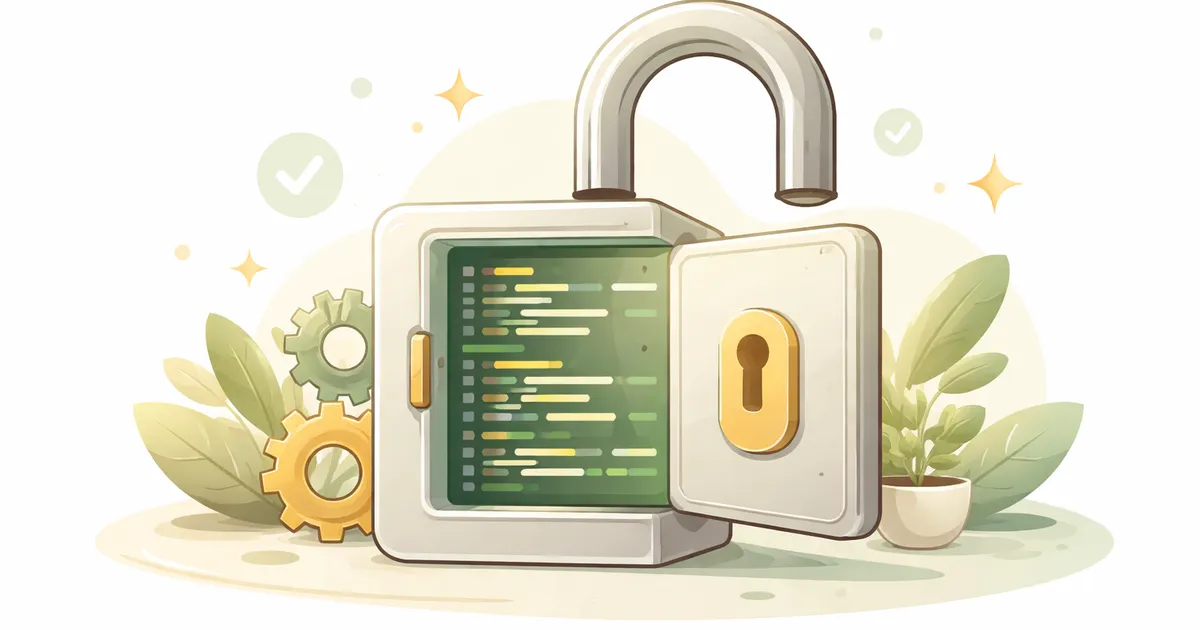
OwnJournal is now fully open source. The complete codebase — frontend, backend, and infrastructure — is publicly available on GitHub under the GNU Affero General Public License v3 (AGPL-3.0).
View the repository on GitHub →
Why This Matters
OwnJournal is built on a simple premise: your journal belongs to you. Your entries are stored in your own cloud storage. With end-to-end encryption enabled, not even we can read them.
We have always said this. Now you can verify it.
Open source means the code that runs OwnJournal is readable by anyone. Security researchers, developers, and privacy-conscious users can inspect exactly how entries are handled, how encryption is implemented, how data flows between your device and your storage, and what our infrastructure actually does.
You do not have to take our word for any of it.
For a journaling app — where the entire value proposition rests on privacy — this matters more than it would for most software. A journal is among the most intimate data a person creates. The architecture that protects it should be inspectable, not just claimed. We explore this idea in depth in our article on why privacy matters for journaling.
What Is Included
The repository includes everything:
- Frontend — the web and mobile interface
- Backend — the server-side code handling authentication, sync, and account management
- Infrastructure — the configuration and deployment code
This is the complete picture of how OwnJournal works, not a partial disclosure.
The AGPL-3.0 License
We chose the GNU Affero General Public License v3 deliberately. AGPL is a strong copyleft licence that extends the conditions of the GPL to network use: anyone who runs a modified version of OwnJournal as a service must also make their modifications available under the same licence.
This means the open source nature of OwnJournal is protected. Anyone can read the code, fork it, self-host it, or contribute to it. But the open source commitment cannot be stripped away by a commercial fork that keeps improvements private.
What This Means for You
If you are an existing OwnJournal user, nothing changes in how the app works. Your entries remain in your own storage. Your encryption keys remain yours. The experience is the same.
What changes is the level of assurance available to you. If you have ever wondered whether the privacy claims hold up in the code, you can now find out. Our article on who can read your digital journal covers how we handle access, and our piece on whether it is safe to store a journal in the cloud explains our encryption architecture. If you are a developer and want to understand how something works, the answer is a repository away.
Contributing
If you find a bug, have an idea, or want to contribute code, the repository is open. Issues and pull requests are welcome.
For security disclosures, please follow responsible disclosure practices rather than opening a public issue. Contact details are in the repository.
We built OwnJournal because we wanted a place to write that was genuinely private — not private by policy, but private by design. Making the code public is the logical extension of that commitment.
The repository is at github.com/Recsty-AB/ownjournal.